
When a buyer compares a 3K carbon fiber pickleball paddle with a T700 carbon fiber paddle, it is easy to assume that the two names describe competing levels of quality. They do not. The labels normally describe different parts of the material specification.
In practical terms, 3K commonly describes the tow size or weave construction used in a carbon-fiber fabric, while T700 is a fiber-grade designation used in carbon-fiber supply chains. Neither label, by itself, tells a brand owner the final paddle’s stiffness, spin, durability, weight, balance, or tournament status.
For an OEM or private-label project, the useful question is not “Which label is better?” The useful question is: “What exact face and paddle construction will be supplied, and what evidence will confirm that the production batch matches the approved sample?”
The short answer
3K and T700 are not an apples-to-apples comparison. A 3K specification may describe the tow or weave architecture of the fabric. A T700 specification may describe a fiber grade. A paddle can therefore combine a T700 fiber with a 3K weave, or use another weave and grade combination. The final product depends on the complete layup, resin system, core, forming process, surface treatment, edge design, handle and quality controls.
Use the label as a starting point for an RFQ, not as a performance guarantee.
What 3K usually tells you
In carbon-fiber terminology, 3K commonly refers to a tow containing approximately 3,000 filaments. The tow size influences the visual weave and the way the fabric can be arranged in a face layup. It does not establish the number of plies, fiber orientation, resin content, cured thickness or final paddle performance.
Two paddles can both use a 3K fabric and still differ substantially because of:
- The number and orientation of face layers.
- Whether the fabric is woven, unidirectional, hybrid or combined with another reinforcement.
- The resin type, resin ratio and cure control.
- The core thickness, density and bonding method.
- The surface finish above the carbon face.
- The outline, handle geometry, edge treatment and weight distribution.
For a buyer, “3K carbon fiber face” is therefore incomplete unless the supplier also describes the layup and the rest of the construction.
What T700 usually tells you
T700 is a fiber-grade designation used in the carbon-fiber supply chain. It helps identify the specified fiber family or grade, but it is not a complete paddle specification. The buyer should ask for the exact material declaration and supplier documentation that apply to the intended construction.
The same T700 label can appear in products with different:
- Face weave and ply count.
- Fiber directions and reinforcement zones.
- Resin systems and curing conditions.
- Core materials and thicknesses.
- Surface finishes and texture methods.
- Forming processes, including cold-pressed and thermoformed builds.
Do not turn a fiber grade into a blanket statement such as “T700 always gives more power” or “3K always gives better control.” Those claims skip the variables that actually determine the assembled paddle.
3K vs T700: a buyer’s comparison table
| Specification question | What the label may indicate | What the buyer still needs to verify |
|---|---|---|
| 3K | Tow size or fabric construction language | Weave type, ply count, fiber direction, face thickness and supplier declaration |
| T700 | Fiber-grade language | Exact source or grade documentation, layup, resin, cure process and construction use |
| Raw carbon | The face may be left unpainted or less covered | Actual texture process, coating or sealant, surface consistency and wear behavior |
| Thermoformed | A forming and bonding process or architecture | Mold design, edge structure, core, temperature/pressure control and finished tolerances |
| 14 mm or 16 mm | Nominal paddle thickness | Measurement location, tolerance, core composition, face layers and weight/balance target |
| Spin or control claim | A market positioning statement | Test method, sample condition, surface wear state and whether the claim applies to the model |
Why the face label is only one part of performance
A paddle face transfers load into the core and the perimeter. The face material matters, but the assembled response also depends on how the layers are oriented and bonded. A small change in ply count, resin content, core density, thickness or perimeter reinforcement can change stiffness, rebound, vibration and balance.
Surface texture is another separate variable. A raw carbon surface, peel-ply finish, spray grit or hybrid texture can produce different initial friction and different wear patterns. A texture claim should be tied to a defined sample, measurement method and condition. It should not be presented as a permanent guarantee.
Weight and balance also matter. Two paddles with the same static weight can feel different if the mass is distributed differently between the head, throat and handle. For a product line, record the target static weight, balance point and, when available, swing-weight or moment-of-inertia method. Do not compare numbers from different test methods as if they were identical.
The OEM validation workflow
1. Write the intended product brief
Before asking for a 3K or T700 sample, define the commercial role of the model:
- Target market and sales channel.
- Player or buyer segment.
- Paddle shape: elongated, hybrid or widebody.
- Nominal thickness and target weight range.
- Face appearance and texture direction.
- Core and perimeter construction.
- Handle length, circumference and grip material.
- Logo, artwork and packaging requirements.
- Whether tournament-use compliance is required.
This prevents the material name from becoming the entire product strategy.
2. Request a complete material declaration
Ask the supplier to state, in writing, what the face actually contains. A useful declaration should cover the face material, weave or architecture, approximate ply arrangement, core, edge/perimeter, forming method and surface finish. If a branded fiber grade is claimed, ask what documentation can be provided for the specified input material.
The goal is not to collect impressive labels. The goal is to make the approved sample reproducible.
3. Approve a measurable golden sample
Record the sample’s product code and revision. Photograph both faces and the edge. Record length, width, thickness, static weight, balance point, handle length, handle circumference and grip details. If the project uses swing-weight or MOI data, record the instrument, fixture and method as well.
Also record the surface condition. A new textured face should not be compared with a worn face, and a coated face should not be described as raw carbon unless the construction supports that description.
4. Test the construction, not only the marketing label
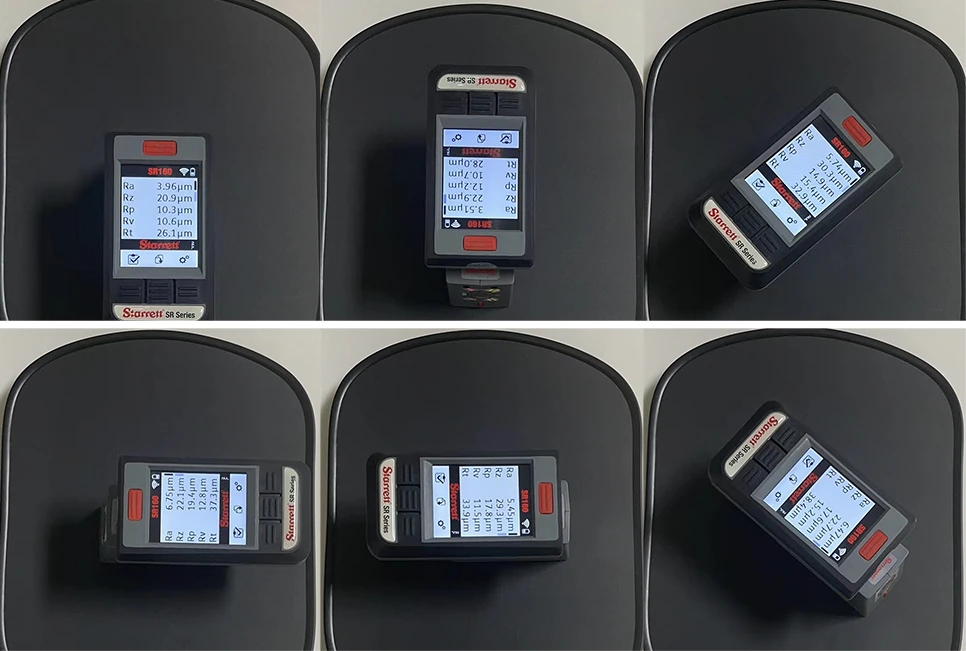
Suggested caption: Surface measurement is one part of paddle validation; it does not identify a 3K or T700 fiber grade by itself.
Depending on the project, the validation plan may include:
- Dimensional and weight checks.
- Balance and swing response checks.
- Face and edge visual inspection.
- Bonding, delamination and perimeter inspection.
- Surface roughness or friction evaluation.
- Deflection or rebound testing using the appropriate method.
- Repeated-impact or durability testing defined for the model.
- Artwork, grip, packaging and barcode checks.
If the product is intended for USA Pickleball-sanctioned play, use the current official manufacturer submission and test resources. A supplier’s internal test report is useful evidence for development and QC, but it is not the same as official approval.
5. Create the first-article release gate
Before bulk production, compare the first production article with the signed golden sample. Release the run only when the material declaration, dimensions, weight range, balance, surface, graphics, grip and packaging meet the agreed tolerances.
If a change is necessary, record it as a new revision. Do not allow a different face fabric, core, texture or edge process to enter production under the old sample code without written approval.
6. Control the batch and the reorder
For each production lot, retain a batch record containing the product code, raw-material lot where available, inspection results, defect disposition, packing information and shipment reference. Reorders should be compared against the same specification and tolerance rather than approved by product name alone.
This is the difference between a one-off sample and a repeatable private-label product.
How to write safe product claims
Prefer claims that describe confirmed construction:
- “Specified with a 3K woven carbon-fiber face for this model.”
- “T700 carbon fiber is used in the approved face construction, subject to project documentation.”
- “Surface texture and weight range are confirmed during sample approval.”
- “Testing and certification requirements are reviewed according to the target market and model.”
Avoid unsupported claims such as:
- “T700 is always stronger and more powerful.”
- “3K guarantees maximum spin.”
- “Raw carbon never wears out.”
- “Every custom paddle is automatically tournament approved.”
RFQ checklist for a 3K or T700 project
Include these fields in the first inquiry:
- Target market and sales channel.
- Paddle shape and nominal dimensions.
- Face label requested: 3K, T700 or another defined construction.
- Face layup and surface finish to be confirmed by the supplier.
- Core type and thickness.
- Edge or perimeter construction.
- Target static weight and balance range.
- Handle length, circumference and grip.
- Logo, artwork and packaging.
- Testing or compliance requirements.
- Sample revision and approval method.
- Expected quantity range and reorder plan, to be quoted for the specific project.
For a carbon-fiber paddle program, review the available carbon fiber pickleball paddles and then send the complete brief through Joying’s OEM and ODM manufacturing page. The carbon fiber paddle OEM specification brief can be used as a supporting reference when preparing the sample request.
FAQ
Is T700 better than 3K carbon fiber for a pickleball paddle?
They describe different parts of a material specification, so the question is not a direct quality comparison. Ask for the complete face layup, resin, core, surface and test evidence for the actual model.
Can a paddle be both 3K and T700?
Yes, if the supplier’s specification uses a T700 fiber in a 3K fabric or weave construction. Confirm the exact combination in the material declaration rather than relying on the product title.
Does a carbon-fiber label prove tournament approval?
No. Approval is model-specific and depends on the applicable rules and official submission/testing process. Treat material language, internal QC and official certification as separate records.
What should a brand compare between samples?
Compare the complete construction: dimensions, thickness, weight, balance, handle, face and texture, edge, bonding, graphics, packaging and the agreed test results. The fiber label alone is not enough.
Conclusion
3K and T700 can both be useful specification terms, but neither should carry the entire sales story. A reliable OEM paddle is defined by a documented construction, a measurable golden sample, a clear release gate and batch records that support reorders. Start with the product requirement, verify the actual material stack, and make performance claims only after the intended model has been tested.
Sources and further reading
- USA Pickleball manufacturer test resources: https://equipment.usapickleball.org/manufacturers-paddle-page/
- USA Pickleball equipment database: https://equipment.usapickleball.org/
- Current market example of material and platform naming: https://www.carbonovasports.com/
- Industry buyer-guide signal for 3K, 12K, face finish and construction terminology: https://quickshotpaddles.com/blog/carbon-fiber-pickleball-paddle-buyers-guide
—