
In the pickleball manufacturing race, “Newer” is usually marketed as “Better.” The industry has spent the last two years obsessing over Thermoforming (Gen 2/Gen 3) technology. The promise of “Unibody” construction and massive power was intoxicating.
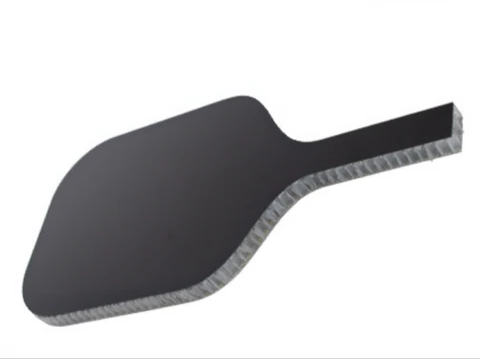
However, a fascinating trend is emerging in 2025: A resurgence of the Cold Press (Gen 1) paddle.
Why are top-tier players and high-level amateurs putting down their high-tech Gen 3 paddles and picking up “old school” Cold Pressed ones? It’s not nostalgia. It’s physics.
At Joying Pickleball, we manufacture both. But today, we are going to defend the Cold Press process and explain why it remains the gold standard for control and reliability.
The Physics of the “Battle”: Heat vs. Stability
To understand the comeback, we must look at how the paddles are made.
1. Thermoforming (The Power House)
- The Process: We place Pre-preg carbon fiber and a Polypropylene (PP) Honeycomb core into a mold. It is baked at high temperatures (over 150°C) and high pressure to fuse everything into a “Unibody.”
- The Risk (The “Hidden” Cost): PP Honeycomb is plastic. At 150°C, it softens. If the temperature curve isn’t controlled perfectly, the honeycomb walls suffer micro-buckling.
- The Result: While you get immense power, you also get “internal stress.” This is the root cause of Core Crush and Delamination. A paddle might feel great on Day 1, but turn “mushy” after a month of hard hitting.
2. Cold Press (The Precision Instrument)
- The Process: We take cured carbon fiber sheets (already hard and stable) and bond them to the honeycomb core using high-grade epoxy resin. This happens at room temperature or low heat.
- The Advantage: The core never suffers heat damage. The structural integrity of the honeycomb is 100% preserved.
Why Pros Are Switching Back (“The Awakening”)
The “Awakening” is driven by three factors that B2B brand owners need to understand:
1. The Need for the “Soft Game” Gen 3 paddles are often described as “Poppy.” The ball flies off the face. While fun for drives, this makes dinking and resetting at the kitchen line difficult. Cold Pressed paddles offer a plush, damp feel. The ball “dwells” on the face longer, giving the player milliseconds more to manipulate spin and placement. For a control player, this is non-negotiable.
2. Zero “Break-in” Period & Reliability A Thermoformed paddle often changes characteristics as the resin breaks down or the core softens over time. A Cold Pressed paddle is consistent. How it plays on Day 1 is how it plays on Day 100. Pros hate surprises in the middle of a tournament.
3. No “Core Crush” Anxiety Because the core wasn’t stressed during manufacturing, Cold Pressed paddles rarely suffer from the crushed cores that plague Gen 3. For a brand, this means significantly lower warranty return rates.
Strategic Advice for B2B Brands
If your product line only consists of Thermoformed Gen 3 paddles, you are missing a huge segment of the market: The Control Freaks.
You don’t have to choose one over the other. A balanced brand should offer:
- The “Power Series”: Thermoformed (Gen 3), elongated, for aggressive bangers.
- The “Control Series”: Cold Pressed (Gen 1), wide-body or standard, for strategic drop-shot artists.
Manufacturing “Modern” Cold Press with Joying
“Cold Press” doesn’t mean “Old Tech” at Joying Pickleball. We have updated the Gen 1 process with modern materials:
- T700 Raw Carbon Surfaces: We apply the same gritty raw carbon to our cold-pressed paddles for maximum spin.
- Reinforced Edge Adhesion: We use aerospace-grade epoxy to ensure the edge guards never come loose—solving the main complaint of early Gen 1 paddles.
Conclusion: The market is swinging back to balance. While Thermoforming brings the heat, Cold Press brings the heart. Don’t leave the “Control” market to your competitors.